
Sizing a Whole House Generator for a Naples Home
Most homeowners start with a generator size matched to the square footage of the house. That is the wrong starting point. A generator powers whatever is connected to it, and in a Naples house the loads that matter most in August are also the hardest ones for an engine to start. Here is how CITE Electric sizes, places and connects a whole house generator, and what to decide this winter so it is proven before the next hurricane season.
The load calculation sets the size
A load calculation adds up what the house actually draws: every air conditioning condenser and air handler, the pool and spa pumps, the pool heater, the range, the dryer, the water heaters, the refrigerators and wine storage, the lighting, the network and the AV rack. It then applies the demand factors the NEC allows, because not everything runs at the same moment.
The figure that catches people out is the starting load, not the running load. An air conditioning compressor draws several times its running current for the instant it starts. A generator that carries three condensers comfortably once they are running can still stall when two of them kick on together. That is the usual story behind a generator that starts in a storm and then cannot hold the house. We size against the largest starting loads, and where it makes sense we add soft starters to the compressors or load management so the big loads come on in turn.
What the automatic transfer switch does
The transfer switch is what makes a standby generator automatic. When the utility supply drops, it tells the generator to start, waits until the generator's voltage and frequency are steady, then moves the house across. When utility power returns and holds, it moves the house back and lets the engine cool before shutting down. Nobody needs to be home, which matters for the many Naples owners who spend part of the year away.
The switch also keeps the generator isolated from the street. A portable generator plugged into a dryer outlet can push power back onto lines that utility crews expect to be dead. A transfer switch at the service makes that impossible.
A service rated switch at the meter transfers the whole house, with load management deciding what runs. A smaller switch feeds an essential loads panel, so only the circuits on that panel get backup. The load calculation and the existing panels decide which suits the house.
Which circuits come back first
Even a large generator benefits from a set order, agreed with you circuit by circuit before the install. In a typical Naples home it runs like this:
- Refrigeration, the network and the alarm panel: small loads that matter most.
- One air conditioning zone, usually the bedrooms, so the house stays livable overnight.
- Lighting, the kitchen and the garage doors.
- The remaining air conditioning zones, as capacity allows.
- Pool and spa heaters and other large loads that can wait, which are the first to shed if the generator nears its limit.
With circuit level metering at the panel, that order is set against what each circuit really draws rather than a nameplate guess. Our energy management page explains how the metering works.
Where the generator sits
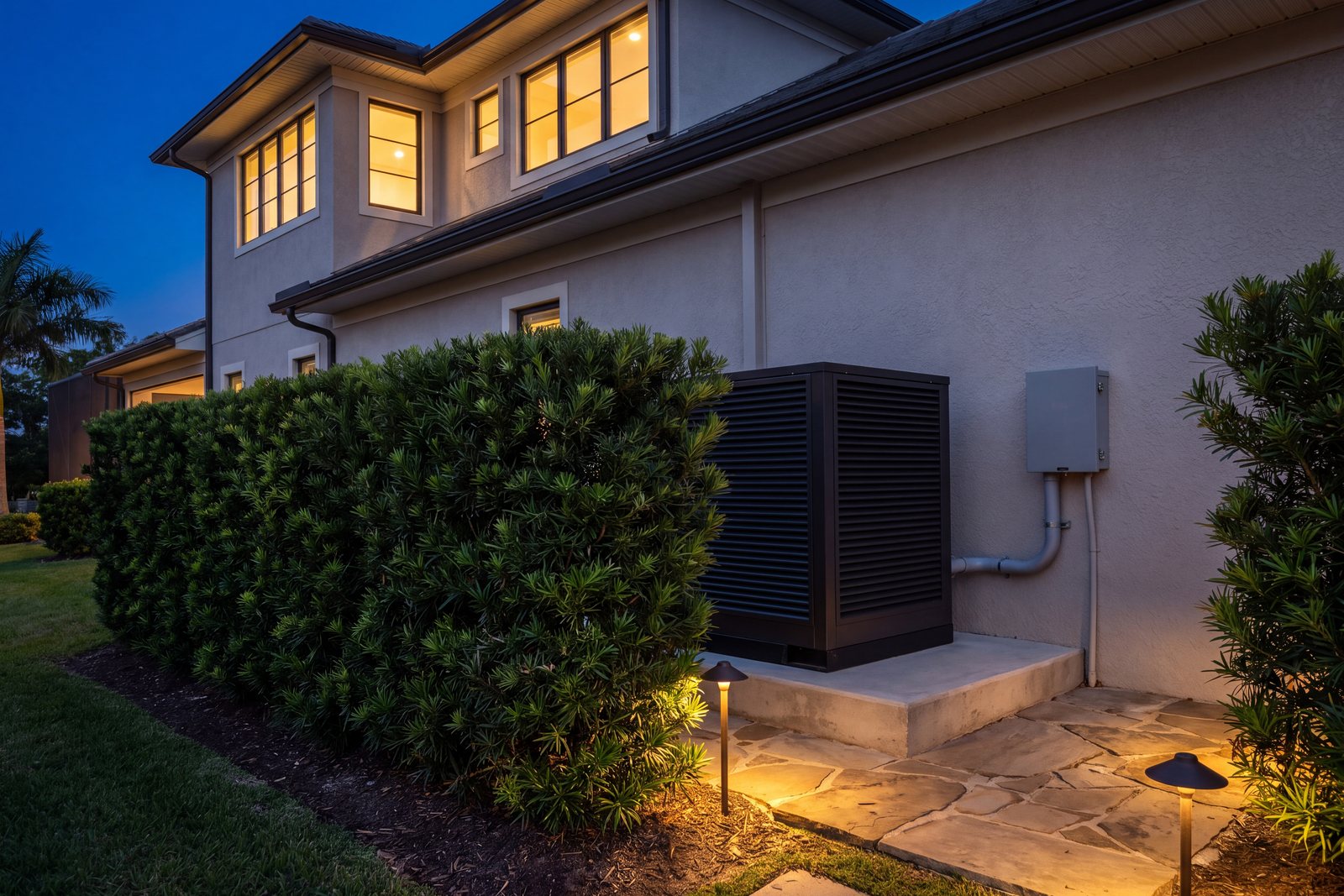
Placement is settled on site, and it is where most surprises turn up. The generator sits outside on a level pad, with the clearances its manufacturer and the code require from windows, doors, soffit vents and air intakes, so exhaust cannot find its way indoors. Local zoning sets the setback from the property line, and many communities in Naples, Bonita Springs and Marco Island want HOA or architectural review approval before anything is set.
In a flood zone the generator and its connections have to sit at or above the required flood elevation, which can mean a raised platform. On the coast, salt air shortens the life of exposed metal, so the enclosure material and a spot out of direct spray are worth the thought.
Fuel is the other half of the decision. Where a natural gas main reaches the street, the generator runs from the utility supply. Many Naples neighborhoods have no gas main, so the generator runs on propane from a tank on the property, above ground or buried. The tank size sets how long the house runs between deliveries, and after a major storm, deliveries are slow. A licensed gas contractor sizes and installs the gas piping.
Noise is a fair concern. A standby generator runs a brief exercise cycle on a schedule, and runs continuously in an outage. Setting it away from bedrooms and the neighbors' lanai does more than any enclosure can.
Permits, inspection and a real test
A standby generator is permitted work. The local building department, Collier County or the city the house is in, inspects the electrical connection, the transfer switch and the gas supply. CITE Electric's master electrician holds the unlimited license, EC13013828, that the permit is pulled under, and we close the permit out after inspection.
Passing inspection is not the finish line. Before handover we cut the utility supply and watch the system work: the generator starts, the switch transfers, the circuits come on in the agreed order, then utility power is restored and the house moves back. You see it happen, and you keep the updated panel schedule and load calculation.
Battery storage alongside the generator
Most outages in Southwest Florida are short: a feeder trips or a transformer fails in a summer thunderstorm, and the power is back before anyone finds a flashlight. A battery system and its inverter carry the house through those on their own, which saves engine hours and fuel for the long outages after a storm. When the generator does run, it recharges the batteries.
Why to plan it in winter
The best time to install a generator is when nobody else is asking for one. After a named storm, homeowners across Collier and Lee County want the same equipment, the same permit reviewers and the same electricians at once. Starting in winter leaves room for the HOA submission, the gas supplier, the permit and the install, with the system tested before hurricane season opens in June.
Questions we hear
How big a generator does a Naples home need?
The size comes from a load calculation of the house, not its square footage. The calculation adds up everything on the panel, including the starting load of each air conditioning compressor, and the generator is chosen to carry the circuits you want on backup with those starts allowed for.
Can a standby generator run the air conditioning?
Yes, if it is sized for it. Air conditioning is the largest load in most Naples homes, and the starting current of the compressors is what sets the generator size. Soft starters and load management let one generator carry more zones by starting them in turn.
Does a whole house generator need a permit in Collier County?
Yes. The building department checks the electrical connection, the transfer switch and the gas supply before the system goes into service. Many HOAs also need to approve the location before the permit is filed.
Should a home generator run on natural gas or propane?
Natural gas is the simpler choice where a gas main reaches the property, because the supply never needs refilling. Where there is no main, which is common in Naples, propane from a tank on site works well, and the tank size sets how long the house runs between deliveries.
Getting a Naples home ready for the next storm season? Read about our backup power and battery storage service, or book a site visit with CITE Electric.
Talk to the people who will do the work.
The property, the rooms and the systems you want. We reply within two business days.