Shade type
Roller, roman and drapery track, chosen window by window against the window opening, the space the raised shade needs and how the room is used.
Decided with the designer, at the drawing stage.

Home/ Smart AV Solutions/ Motorized shading
Shades that move on a schedule, on the same keypad as the light. Fabric, openness and the pocket detail are agreed before the ceiling closes, not chosen from a bracket catalog afterwards.
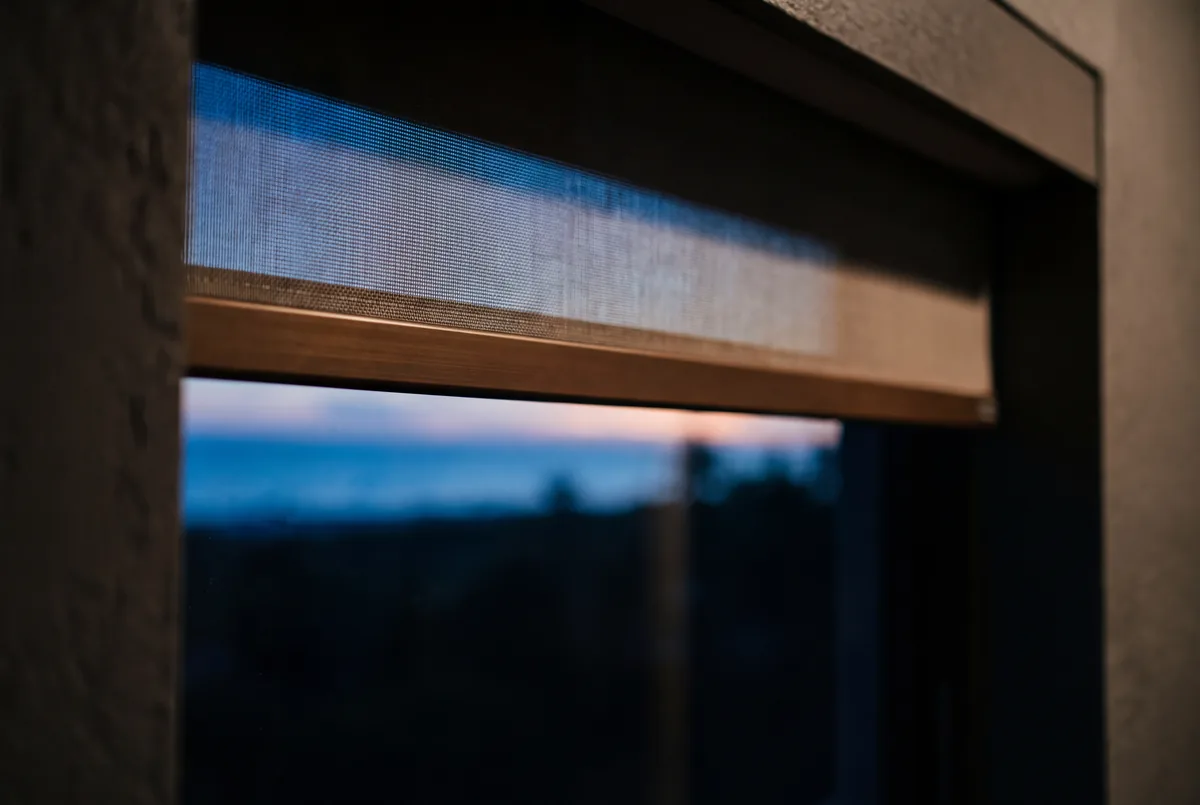
The problem
Shades on their own remote end up left down or left up.
Shading bought as a product arrives with its own remote, its own app and its own schedule, so it gets used for a week and then ignored. Shading on the lighting system is another zone: the keypad by the door raises the room in the morning, a timed schedule brings the west-facing shades down through the afternoon, and the evening scene lowers everything at once. Shades that track the sun by themselves are possible, but they need extra hardware and a lot of logic written for the property, so a timed schedule is what we usually recommend. What changes for you is that the shades are already in position when you walk in.
Morning light, the glare off the Gulf at sunset, the view at dusk and privacy at night. The shades follow the day on a schedule, on the same keypads as the lighting.
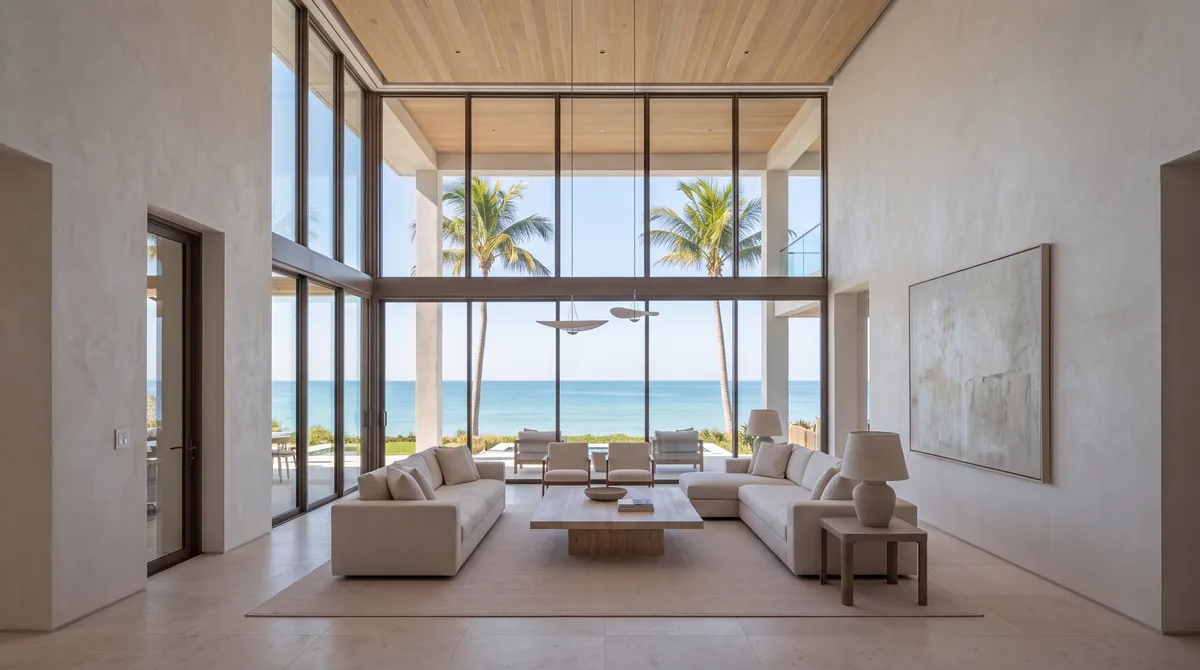
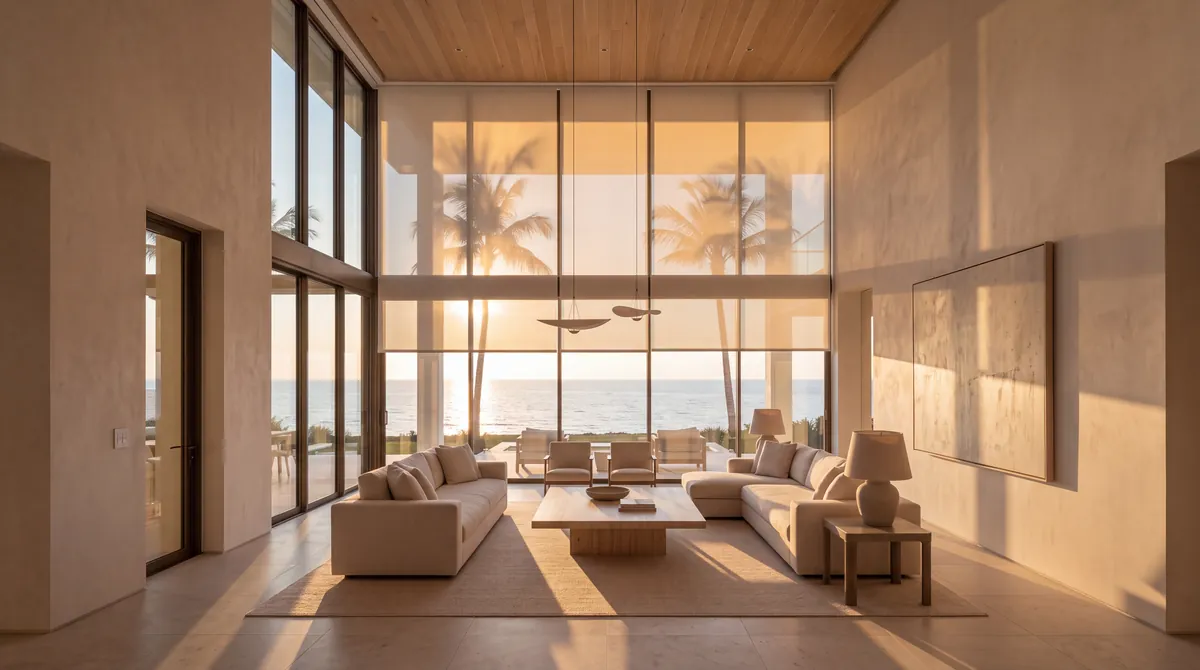
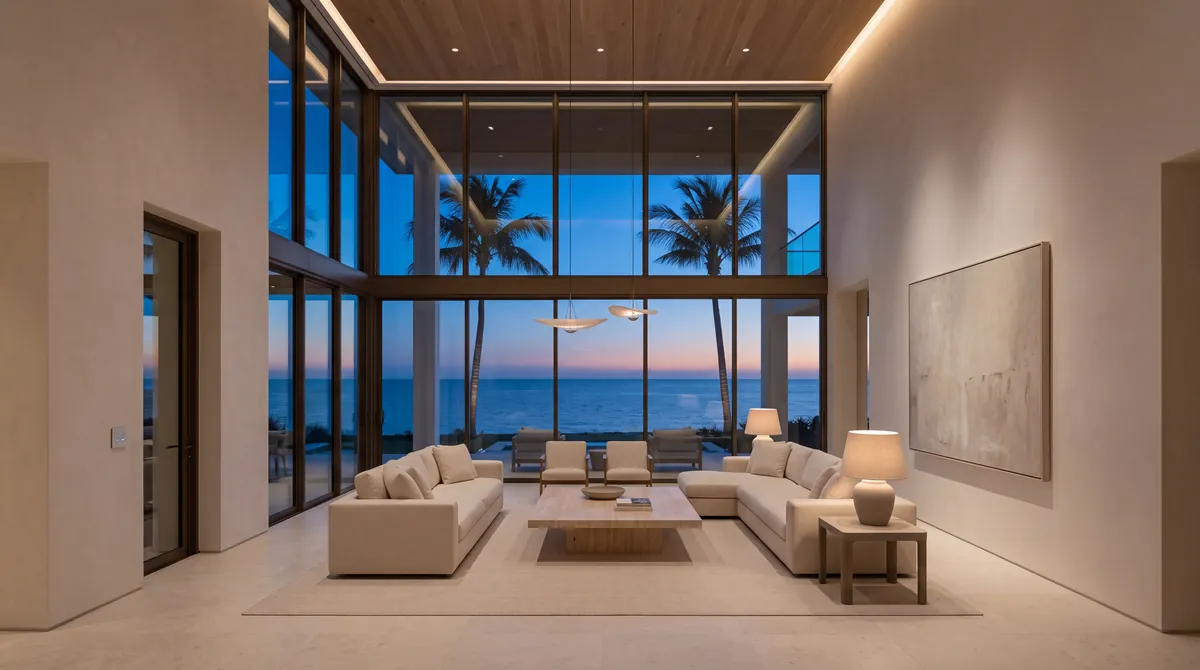
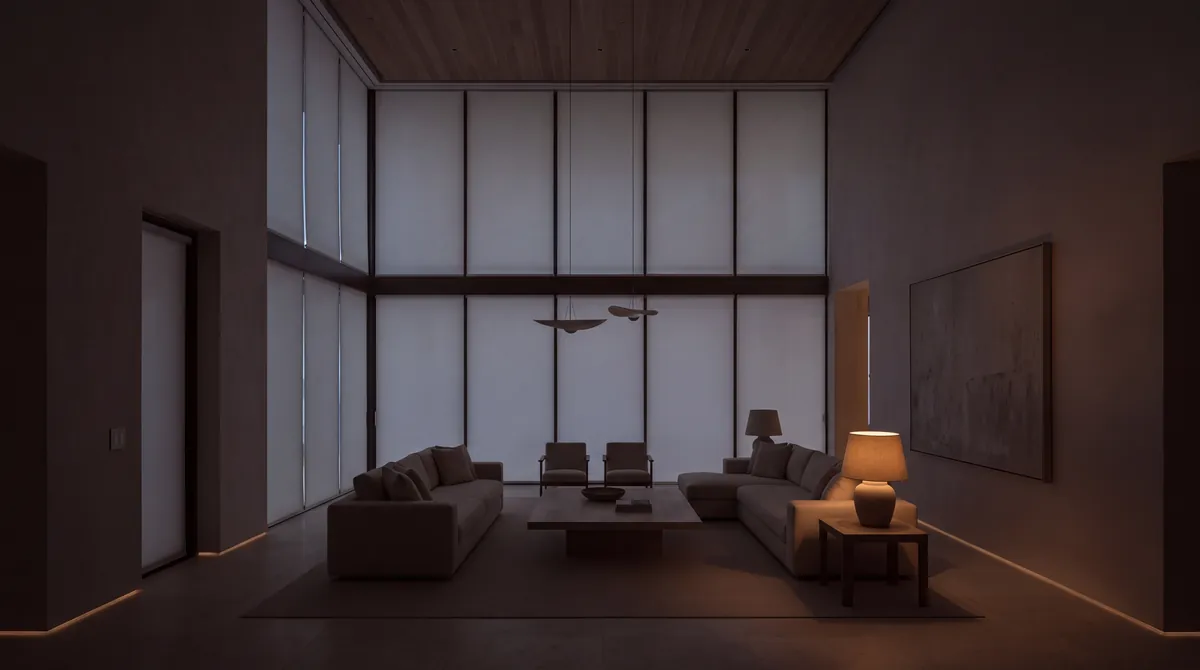
A living room facing the Gulf: morning, sunset, evening and night.
Play the eveningSunset to night as a film, the shades coming down as the light goes.
1 of 5
On a west facing room the afternoon sun heats the glass long before it reaches the sofa. The shades come down ahead of it, and with the right fabric the Gulf stays in view through them.
Plan your project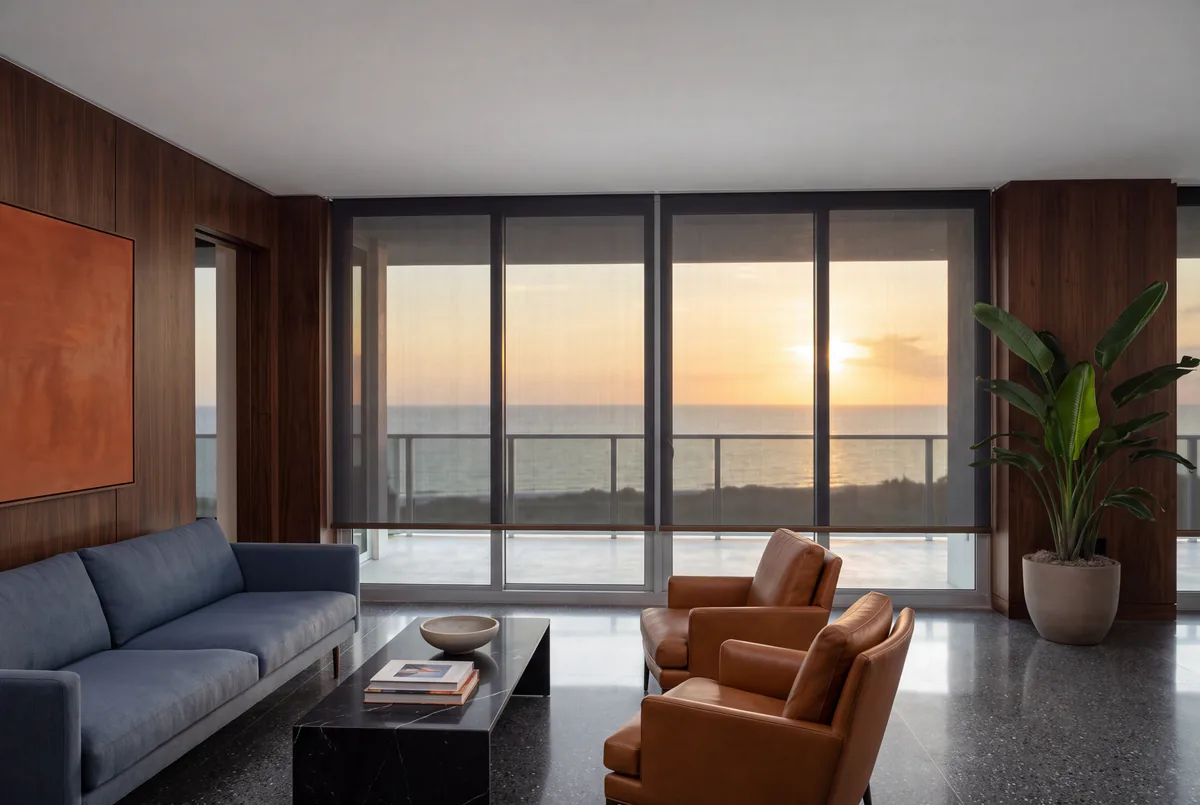
Roller, roman and drapery track, chosen window by window against the window opening, the space the raised shade needs and how the room is used.
Decided with the designer, at the drawing stage.
Openness is how open the weave is. It sets how much view you keep with the shade down and how much heat it blocks. Samples go on the window before anything is ordered.
Chosen in the room, in its own daylight.
A pocket is a recess in the ceiling that hides the shade when it is up. It is a builder detail, so it has to be agreed early rather than solved on site.
Decided with the builder, early in construction.
Sometimes. A shade needs power and control at the head of the window, which is straightforward while a ceiling is open and difficult in a finished room where the ceiling stays closed. We survey the windows first and tell you which applies.
Yes. That is the point of putting them on the same system. One scene sets the light level and the shade position together, and both sit on the keypad by the door rather than in two apps.
No. CITE Electric is an unlimited electrical contractor under the same ownership, so the circuits, the panel and the devices they feed are ours, and so is the programming. There is no handover between two firms and no argument about whose side a fault sits on.
A Bronze care plan comes with the system, covering seasonal startups and shutdowns, twice-yearly maintenance visits and technical support. Silver, Gold and Diamond add after hours support, more service hours, faster scheduling and network health monitoring.
The property, the rooms and the systems you want. We reply within two business days.