
Life Safety Power for Offices, Clubs and Shared Buildings
Fire alarm, emergency lighting and access control are three separate systems with one duty in common: they have to keep working at the moment everything else stops. That makes their power as important as the devices themselves. For an office, a club or a shared building in Naples, this is how the power side of life safety is wired, kept live in an outage, tested and signed off, and what changes when the building is renovated.
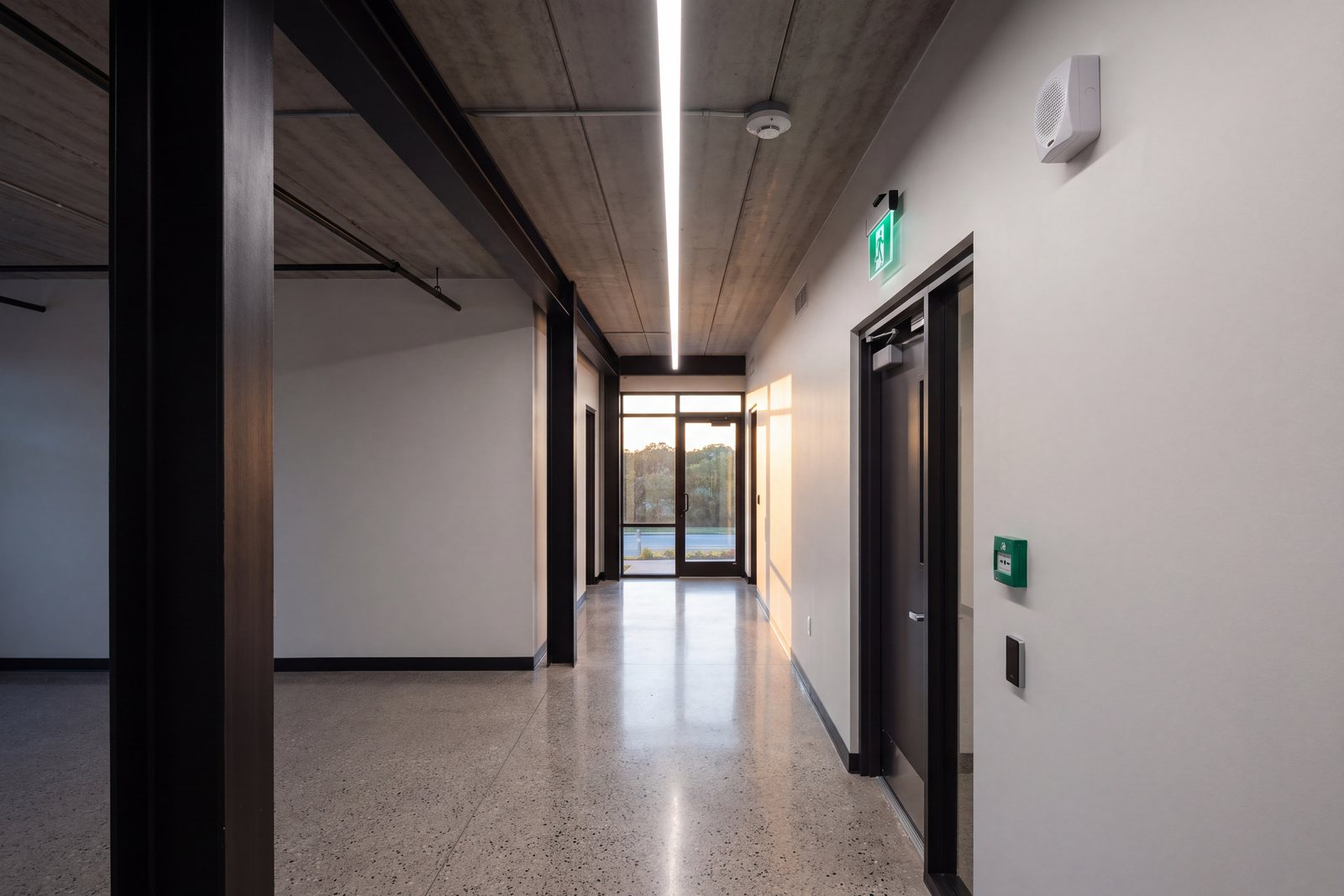
Fire alarm and detection circuits
A fire alarm control panel runs from its own dedicated branch circuit. The breaker feeding it is marked in red and protected so that nobody switches it off by accident, which means a tenant or a cleaner cannot turn off the alarm along with the lights. Inside the panel, standby batteries take over when that circuit fails, sized to keep the system watching for the period the code sets and then sound the alarm.
From the panel, the initiating devices (smoke detectors, heat detectors, manual pull stations and duct detectors) and the notification appliances (horns, strobes and speakers) run in rated fire alarm cable, in conduit where the building calls for it. An addressable system reports each device by location, which makes testing and fault finding far easier. Larger buildings often need extra power supplies for the strobes, each with its own circuit and batteries, and those circuits deserve the same care as the panel. Carbon monoxide detection, where the building has fuel burning equipment or the code calls for it, is often tied into the same system.
Emergency lighting, egress lighting and exit signs
When the supply fails, the way out has to stay lit: corridors, stairs, exit doors and the route outside to a safe place. Exit signs must stay lit as well. There are three common ways to power them.
- Unit equipment. Emergency fixtures and exit signs with their own batteries. Each unit is fed from the same branch circuit as the normal lighting in its area, so it comes on when that circuit fails, not only when the whole building goes dark.
- Generator fed emergency circuits. Emergency lighting on its own branch of the distribution, moved to a generator by a dedicated transfer switch and kept apart from all other wiring.
- A central battery system. One inverter and battery bank feeding the emergency fixtures from a single point, which makes testing simpler in a larger building.
The right choice comes down to how big the building is, its occupancy and whether a generator is in place or planned. In a club with a large dining room, emergency lighting also has to let people find their way between tables and chairs, not only along the corridors.
Access control power and the doors
Every electrified lock needs a clear answer to two questions: what does this door do when the power goes, and what does it do when the fire alarm sounds? A fail safe lock, such as a magnetic lock, releases when it loses power. A fail secure lock stays locked without power, and free exit from the inside then comes from the mechanical hardware, a lever or a panic bar. Doors on an exit route must let people out in an emergency, so their locks are released by the fire alarm through a relay at the access control power supply.
Access control power supplies carry batteries to ride through short outages. They need dedicated circuits, a fire alarm interface that is wired and tested, and a recorded location. The access system itself, the readers, controllers and software, is installed by CITE Solutions under the same ownership, so the lock power and the access design are settled together at rough-in. Our security and access page covers the system side.
Testing, inspection and certification
Life safety systems are judged on paper as much as in the building. Before handover, every fire alarm device is tested and the result written down, the emergency lighting is proven with the normal supply cut, and the door releases are tested from the fire alarm. The fire authority for the address issues the permit and inspects the work, and certification is part of the handover. From then on, the fire alarm needs periodic inspection and testing, and emergency lighting needs regular functional tests plus a full duration battery test each year, all on record. Insurers ask for those records as well as the inspector.
When a renovation triggers upgrades
A renovation rarely leaves life safety untouched. Moving walls changes the routes people take to the exits and the spacing of detectors. A new ceiling moves every device mounted in it. A change of use, such as an office turned into a fitness studio or a storeroom turned into a bar, can change the occupancy and with it what the code requires. An addition can push the building past the point where a full fire alarm system or more exit capacity is needed. The existing panel matters too: an older panel can run out of capacity or support, and adding devices to it is not always possible.
The way to avoid surprises at inspection is to review life safety at the drawing stage, alongside the lighting and the panel schedule, rather than after the walls close. When CITE Electric wires it, the review, the installation and the certification sit under one unlimited license, whose holder is the master electrician on our own staff.
Questions owners ask
Who can install fire alarm wiring in Florida?
Fire alarm wiring in Florida must be installed by a contractor whose license covers it, and CITE Electric's unlimited electrical contractor license does. Each job is permitted, and the local fire authority inspects it before certification.
What happens to locked doors when the power goes out?
It depends on the lock. Fail safe locks release when they lose power, while fail secure locks stay locked but still let people out from the inside through their mechanical hardware. Locks on exit routes also release when the fire alarm activates.
How often does emergency lighting need to be tested?
Emergency lighting needs short functional tests at regular intervals through the year and a full duration battery test once a year, with every result recorded. Inspectors and insurers both check those records.
Does a renovation mean the fire alarm has to be upgraded?
Often, yes. Moving walls, replacing ceilings or changing how a space is used can change detector spacing, exit routes and what the code requires, so the fire alarm and emergency lighting are reviewed as part of the renovation drawings.
Wiring or renovating a commercial building in Naples? See our life safety, fire and access control service, or start a project with CITE Electric.
Talk to the people who will do the work.
The property, the rooms and the systems you want. We reply within two business days.